

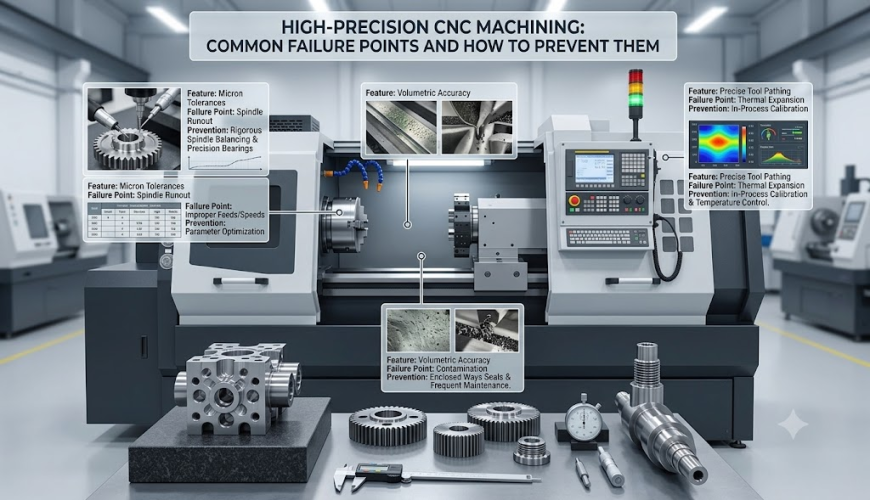
Manufacturers across the United States depend on high precision CNC machining to keep production lines running and parts within spec. When a machined component fails, the cost is rarely limited to the part itself. Downtime, missed shipping windows, and strained customer relationships often follow.
This guide breaks down the most common failure points in precision CNC machining and explains how a reliable process, the right equipment, and clear communication prevent them. Whether you run a small assembly shop or manage procurement for an aerospace supplier, these fundamentals apply to your sourcing decisions.
Why High Precision CNC Machining Fails More Often Than Buyers Expect
Many buyers assume that once a part is programmed into a CNC machine, consistency is guaranteed. In practice, high precision CNC machining depends on dozens of variables working together: tool selection, material behavior, machine calibration, and operator experience. A gap in any one of these areas can produce parts that pass a quick visual check but fail under real-world load.
Buyers who have been burned by inconsistent suppliers often assume the technology itself is the problem. Usually, the real issue is a shop that treats precision CNC machining as a one-time setup rather than a process that needs monitoring from the first cut to the final inspection.
Common Failure Point 1: Poor Material Selection and Handling
Material inconsistency is one of the most overlooked causes of part failure in precision CNC machining. Aluminum, stainless steel, and engineering plastics all behave differently under heat and cutting pressure. A machinist who does not account for these differences risks warping, tool chatter, or dimensional drift.
Improper storage and handling before machining also introduces variation. Metal stock that sits in a humid warehouse or gets exposed to temperature swings can shift slightly in dimension before it even reaches the machine. A CNC machining manufacturer that controls material sourcing and storage conditions reduces this risk before production starts.
Common Failure Point 2: Tooling Wear and Poor Maintenance Schedules
Cutting tools degrade with every pass, and that wear affects surface finish and tolerance long before it becomes visible to the naked eye. Shops that push tools past their recommended life to save on replacement costs often produce parts that look acceptable but measure outside spec.
Reliable CNC machining companies build tool replacement schedules based on data, not guesswork. They track cycle counts, monitor for early signs of wear, and replace tooling before quality drifts. This approach costs more upfront but saves buyers from receiving batches of parts that need rework or scrap.
Common Failure Point 3: Inadequate Quality Control at Each Stage
A single final inspection is not enough for high precision CNC machining work, especially for parts with tight tolerances or complex geometries. Errors introduced early in the process, such as a fixture that shifted slightly or a program that was not updated after a design change, can compound across multiple operations.
In-process inspection catches these issues before they become expensive. Checking critical dimensions after roughing, after finishing, and again before shipping gives a shop multiple chances to catch a problem while it is still cheap to fix. Buyers should ask any potential cnc machining manufacturer how often parts are measured during production, not just at the end.
Common Failure Point 4: Miscommunication on Specifications and Tolerances
Some of the costliest failures in precision CNC machining have nothing to do with the machine at all. They start with a drawing that was interpreted differently than intended, a tolerance that was assumed rather than confirmed, or a revision that did not reach the shop floor in time.
Clear documentation and a defined communication process solve most of these problems. Before a job begins, a dependable partner confirms critical dimensions, surface finish requirements, and any special material certifications needed for the industry involved, whether that is aerospace, medical, or defense.
How Mentco Prevents These Failure Points
At Mentco, every high precision CNC machining project starts with a detailed review of the part drawing and the customer’s tolerance requirements. This step alone eliminates a large share of the miscommunication issues that cause delays and rework further down the line.
Mentco also maintains documented tooling schedules, in-process inspection checkpoints, and controlled material handling procedures. These practices are built into daily operations rather than treated as optional extras, which is why manufacturers across the USA return to Mentco for repeat orders on parts that cannot afford to fail.
Setting Realistic Timelines for Precision Work
Rushed timelines are a hidden contributor to part failure. When a shop compresses a machining schedule to hit a delivery date, steps like tool changes and in-process checks are sometimes skipped. Mentco sets realistic production timelines upfront and communicates any changes immediately, so customers are never surprised by a late shipment or a rushed batch of parts.
Customers working with Mentco receive a clear project timeline from quote to delivery. This includes expected lead time for prototyping, first article inspection, and full production runs, giving procurement teams the information they need to plan their own schedules with confidence.
After Sales Support That Keeps Production Moving
A precision part that fails after installation creates a problem that extends well past the original order. Mentco provides after sales support that includes dimensional reports, material certifications, and a direct point of contact for any questions that come up after a part ships.
If a customer identifies an issue with a completed order, Mentco investigates the root cause and works with the customer on a resolution rather than treating the conversation as closed once the invoice is paid. This ongoing support is part of why manufacturers rank Mentco among the CNC machining companies they trust for recurring work.
Frequently Asked Questions
What makes high precision CNC machining different from standard CNC machining?
- High precision CNC machining holds tighter tolerances, often within a few thousandths of an inch, and requires more rigorous inspection throughout production compared to standard machining work.
How do I know if my supplier follows proper precision CNC machining practices?
- Ask about their in-process inspection frequency, tooling replacement schedule, and how they handle material certification. A supplier who cannot answer these questions in detail is a risk for tight-tolerance work.
What industries rely most on precision CNC machining?
- Aerospace, medical device, defense, and automotive industries in the USA depend heavily on precision CNC machining because part failure in these sectors carries significant safety and financial consequences.
Can Mentco handle both prototype and full production runs?
- Yes. Mentco supports customers from initial prototyping through full production, using the same quality control standards at every stage.
What should I provide when requesting a quote from a CNC machining manufacturer?
- A detailed drawing with tolerances, material specifications, expected quantities, and any required certifications will help a CNC machining manufacturer give an accurate quote and timeline.
How does Mentco handle a part that does not meet specification after delivery?
- Mentco investigates the issue, provides documentation on the root cause, and works directly with the customer to correct the problem, including replacement parts when needed.
Does working with fewer, more reliable CNC machining companies reduce long-term costs?
- Yes. Consolidating work with a small number of trusted CNC machining companies reduces onboarding time, improves communication, and lowers the risk of the failure points described in this blog.
